Physical Address
60 Ekwema Cres, Layout 460281, Imo
Physical Address
60 Ekwema Cres, Layout 460281, Imo

One of those phones that refuses to go out of style is Samsung S10. Even years after its release, people are still searching for the Samsung S10 Price in Nigeria because it offers premium features at a much lower cost than newer Samsung flagships. From its sharp display to its reliable cameras, the Samsung S10 still delivers solid everyday performance.
So, if you’re thinking of buying one in Nigeria, knowing the current price and what the phone can still handle is the smart place to start.
The Samsung Galaxy S10 marked a high point in Samsung’s 2019 flagship lineup, blending cutting-edge technology with a refined design. Even years after its debut, it remains a sought-after model in Nigeria for buyers seeking premium performance at a moderate price.
In this article, we will do a thorough review of the Samsung S10 – from its initial release date and detailed hardware specifications, key features, and its market availability on both online and offline platforms.
| Feature | Details |
| Device Name | Samsung Galaxy S10 |
| Release Year | 2019 |
| Network Support | 4G LTE |
| Display | 6.1-inch Dynamic AMOLED, Quad HD+ |
| Screen Protection | Corning Gorilla Glass 6 |
| Rear Camera | Triple camera (12MP wide + 12MP telephoto + 16MP ultra-wide) |
| Front Camera | 10MP |
| Processor | Exynos 9820 |
| RAM | 8GB |
| Internal Storage | 128GB (Expandable up to 512GB) |
| Operating System | Android (Upgradable to Android 12, One UI) |
| Battery Capacity | 3,400mAh |
| Charging | Fast charging, wireless charging, reverse wireless charging |
| Water Resistance | IP68 dust and water resistance |
| Audio | Stereo speakers tuned by AKG, 3.5mm headphone jack |
| Samsung S10 Price in Nigeria (New) | ₦220,000 – ₦330,000 |
| Samsung S10 Price in Nigeria (UK Used) | ₦160,000 – ₦230,000 |
| Best For | Premium experience at a reduced flagship cost |
| Availability in Nigeria | Jumia, Slot, Jiji, Easybuy, physical phone retailers |
Samsung unveiled the Galaxy S10 series in early 2019. It was announced at the Samsung Unpacked event on February 20, 2019, with a worldwide release following soon after. In many markets, including Nigeria, the Galaxy S10 hit store shelves in early March 2019.
Notably, the phone became available to Nigerian consumers around March 2019. This timing meant the S10 arrived just ahead of the busy spring sales season. It launched running Android 9 (“Pie”) with Samsung’s One UI on top. At release, it was priced as a flagship device, but as newer models have arrived, its price in Nigeria has gradually come down to more affordable levels.
Check out 15 Latest Samsung Phones and Prices in Nigeria
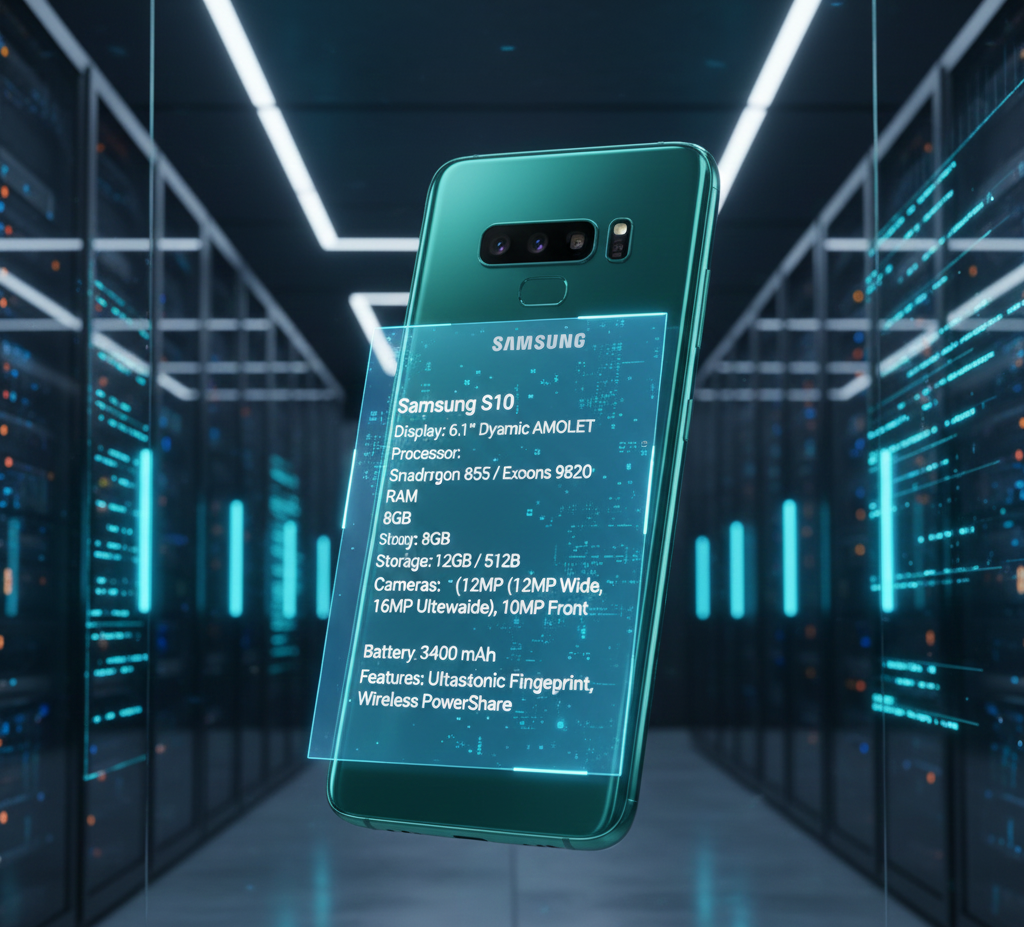
The Samsung Galaxy S10 packs a robust set of hardware that was competitive with other 2019 flagships. It features a 6.1-inch Dynamic AMOLED display with QHD+ resolution (3040×1440 pixels), giving very sharp text and vibrant colors.
Under the hood is Samsung’s own Exynos 9820 octa-core processor (or a Snapdragon 855 in some regions) paired with 8 GB of RAM.
The phone comes with either 128 GB or 512 GB of built-in storage, and crucially it supports expandable storage via microSD card (up to 512 GB more). The S10 has a triple rear camera system – a 12 MP wide-angle lens (with dual aperture for low-light shots), a 12 MP telephoto lens (with optical zoom), and a 16 MP ultra-wide lens. Selfies are handled by a 10 MP front camera.
The battery capacity is 3400 mAh, which was ample for its time, and supports 15W fast charging (including 15W wireless charging and 9W reverse wireless charging). Software-wise, it originally ran Android Pie (One UI) and was later upgradeable to newer Android versions. Connectivity features include Wi-Fi 6 (802.11ax), Bluetooth 5.0, NFC, GPS, and USB-C.
The S10 was designed with a Gorilla Glass front and back (with a metal frame) for durability. In summary, the S10’s specs – from its high-resolution display and powerful processor to its versatile cameras – made it a fully featured device at launch.
A standout feature of the Galaxy S10 is its display. The S10 sports a 6.1-inch Curved Dynamic AMOLED panel with a resolution of 3040×1440 pixels (often referred to as “QHD+”). This large, bright screen produces very sharp imagery (roughly 550 pixels per inch) and covers the full sRGB color gamut plus a wide DCI-P3 color space for rich, accurate colors.
Samsung’s Dynamic AMOLED technology also supports HDR10+, meaning it can display high dynamic range content with greater contrast and detail in both shadows and highlights. The panel has a hole-punch cutout in the top right for the front camera, giving nearly an edge-to-edge feel.
In day-to-day use, the S10’s screen is vivid and clear – great for watching videos or playing games. It can reach very high brightness (useful outdoors), and it has a high contrast ratio thanks to the depth of its OLED blacks.
Samsung also included features like Always-On Display, so you can see the clock and notifications with the screen off (using minimal power). Overall, the S10’s display delivers a top-tier visual experience for its size, befitting its flagship status.
The camera system on the Galaxy S10 was one of its major highlights. It has a triple-lens setup on the rear:
Together, these three lenses cover most photographic scenarios. Daylight photos are very sharp, wide-angle shots capture a lot, and the ultra-wide adds flexibility. The S10 can shoot up to 4K video at 60fps. It also has features like HDR and an impressive Night Mode. For selfies, the front camera is 10 MP with an f/1.9 aperture, capable of 4K video as well.
Samsung tuned the S10’s camera to produce vivid colors by default (matching many people’s preferences), though it also supports manual controls and RAW capture if you want more customization. In real-world use, this camera array was praised for its versatility: from wide landscapes to telephoto portraits, the S10’s cameras remain very capable.
In low light, it outperforms many older phones thanks to the wide aperture and OIS. Overall, the camera hardware on the S10 was flagship-class in 2019 and still holds up decently today for photography enthusiasts.
Under the hood, the Galaxy S10 was built to be fast. In regions like Nigeria, the S10 typically shipped with the Exynos 9820 chipset (a 7nm octa-core processor) paired with 8 GB of RAM. This combination delivered smooth performance for everyday tasks and gaming.
Whether you’re browsing multiple apps, watching videos, or playing 3D games, the S10 handles it without noticeable lag. In markets like the US, some S10 units used the Snapdragon 855 chip, which offers similar performance.
Either variant is more than capable for current apps. Graphically, the phone’s GPU (Mali-G76 MP12 with Exynos or Adreno 640 with Snapdragon) can run most games at high settings.
In typical use, the S10 felt snappy: apps open quickly, multitasking is fluid, and even today it remains adequate for the latest apps. Samsung also included features like an ultrasonic in-display fingerprint sensor (under the screen) for biometric security, and the S10 supports Samsung DeX (desktop mode over cable).
The software (One UI over Android) is relatively clean and updated often. Overall, the performance of the Galaxy S10 was flagship-level at release, making it a powerful daily driver. It is still reliable for modern use, especially for those who do not demand the very latest chipset.
The Samsung Galaxy S10 comes with a 3400 mAh non-removable battery. When it launched, this was about average for a high-end 6.1-inch phone, and it holds up pretty well in daily use.
In practice, the S10’s battery life can comfortably last a full day with moderate usage (social media, browsing, calls, and some video). Heavy users (especially gamers or video streamers) may need a top-up by evening.
The phone supports 15W wired fast charging, so recharging from low to full takes about 1.5 hours. It also has 15W wireless charging, allowing convenient cable-free top-ups with compatible chargers, and a 9W reverse wireless charging mode (“Wireless PowerShare”) to top up other devices (like smartwatches) by placing them on the S10’s back.
Samsung also included battery-saving modes in software, so you can limit background processes to extend life if needed. The S10 does not support the ultra-fast 45W charging found in some newer models, but its charging speed is still decent.
Overall, battery management on the S10 is solid, combining a respectable capacity with flexible charging options. For a 2019 flagship, its battery performance is good: you get all-day use and multiple ways to recharge.
The Galaxy S10 offers a range of storage options. It comes standard with 128 GB of internal storage (with UFS 2.1 speed), and certain models were also offered with 512 GB. For most users, 128 GB provides ample space for apps, photos, and videos.
If you choose the 512 GB model, you have a tremendous amount of onboard storage (good for heavy media or storing large video files). Importantly, the S10 has a microSD card slot that supports cards up to 512 GB. This means you can expand your storage further (up to roughly 640 GB total by using a large microSD card).
Samsung allows the use of a hybrid slot for the microSD card and second SIM (on dual-SIM models), so you can add storage without sacrificing the phone’s dual-SIM capability.
The storage read/write speeds are fast, meaning apps launch quickly and file transfers are efficient. Overall, the storage on the S10 is generous and expandable, giving users plenty of room for data and the flexibility to increase capacity if needed.
At launch, the Samsung Galaxy S10 ran Android 9.0 (Pie) with Samsung’s One UI skin on top. One UI is a custom interface by Samsung designed to make large-screen phones easier to use, with controls placed within thumb-reach and a simplified layout.
The S10 has since received multiple Android updates (to Android 10, 11, and possibly beyond), keeping it reasonably current in software. It includes all the standard Samsung apps (like Samsung Pay, Samsung Health, Bixby assistant) as well as Google’s suite of apps.
Key software features include a Dark Mode for the interface, Night Mode camera processing, and support for Samsung DeX (which lets you connect the phone to a monitor or PC for a desktop-like experience).
Security updates are pushed regularly (though Samsung’s update schedule has slowed for older models). In summary, the software on the S10 is modern and feature-rich, with Samsung’s polish.
Users get the latest Android features at launch, plus Samsung-specific enhancements. The phone still offers a secure and up-to-date experience for its class.
The Galaxy S10 is loaded with connectivity options. For cellular networks, it supports 4G LTE Cat.20, which means it can achieve very high download speeds on 4G networks (up to 2.0 Gbps down, if the carrier supports it).
The S10 is a 4G-only device – it does not have built-in 5G support in the standard S10 model (Samsung released a separate “S10 5G” variant).
In practice, this means you can use any modern Nigerian 4G network without issue, but you cannot access 5G networks with this model. The phone also supports dual-SIM (nano-SIM) operation, with an optional hybrid second slot for microSD.
For wireless connections, the S10 includes Wi-Fi 6 (802.11ax) for fast local network speeds, Bluetooth 5.0 for accessories, NFC for contactless payments/Android Beam, GPS, GLONASS for navigation, and an infrared port for remote control functionality.
It has USB 3.1 (Type-C) for data and charging, and retains the 3.5 mm headphone jack – a feature that would disappear in later Galaxy S models (the S10’s inclusion of a headphone jack was one of the last in the series).
The phone also features various sensors and radios: it has an in-display ultrasonic fingerprint sensor (for fast unlocking), an ambient light sensor, accelerometer, gyroscope, barometer, proximity sensor, etc. For audio connections, the inclusion of a headphone jack and USB-C audio means you can use wired headphones or wired dongles easily.
Simply put, connectivity on the S10 is comprehensive: it can tap into high-speed 4G networks, connect to any modern wireless standard, and link to a wide range of accessories and services.
Audio on the Galaxy S10 is handled by a tuned stereo speaker system. Samsung worked with AKG (a Harman audio brand) to fine-tune the phone’s sound. The result is stereo sound coming from two speakers – one at the bottom and one at the top (which also acts as the earpiece speaker).
These stereo speakers support Dolby Atmos playback, which can create a wider soundstage and more surround-like audio, especially with music or movies encoded for Atmos. Overall, the speakers are clear and reasonably loud for phone speakers, with good bass response relative to the thin chassis.
Critically, the S10 keeps the 3.5mm headphone jack. Many modern smartphones have removed it, but the S10’s retention of a headphone jack allows users to plug in wired headphones directly.
Audiophiles who prefer wired over Bluetooth headphones appreciated this feature. When using headphones (wired or USB-C) or Bluetooth audio, the S10 offers clear and full sound.
Samsung also included an enhanced digital-to-analog converter (32-bit HiFi DAC support) to improve wired audio quality when using supported headphones. In practical use, users can expect solid sound output and the flexibility to use a variety of earphones/headphones.
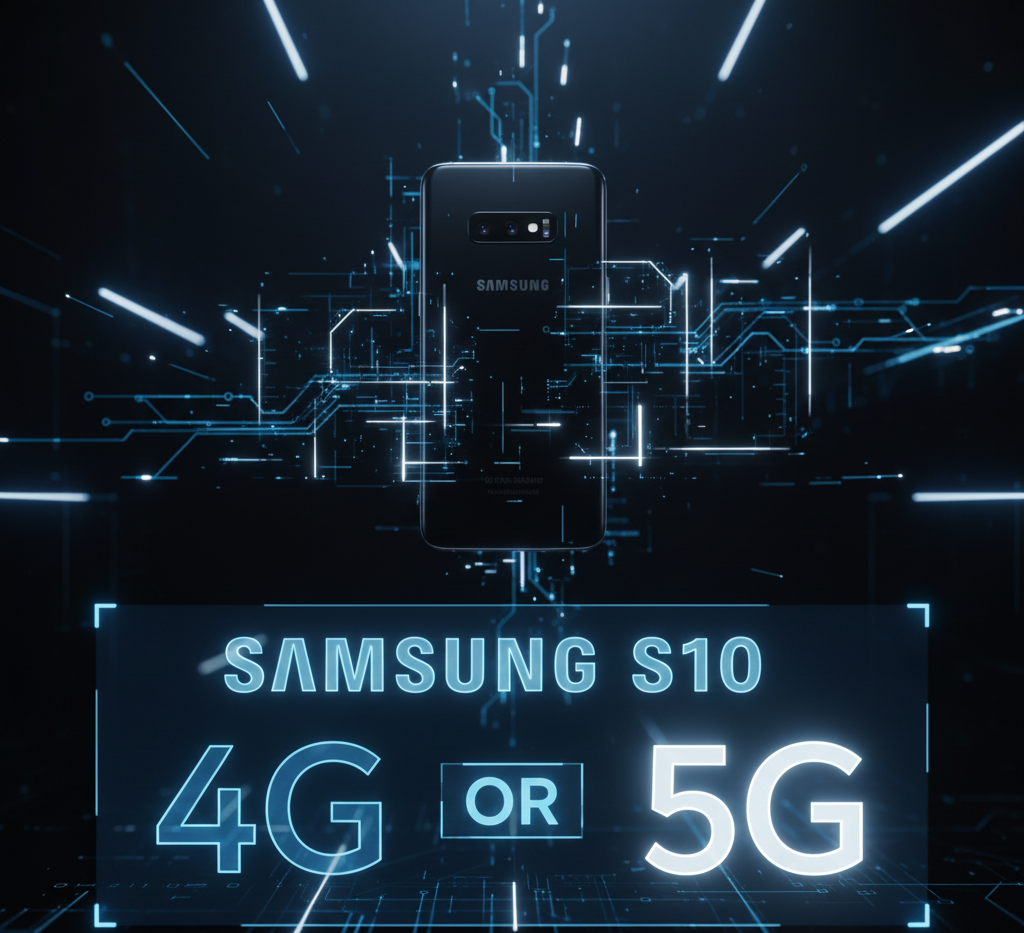
The standard Samsung Galaxy S10 is strictly a 4G (LTE) phone. It does not have 5G radio hardware. It supports advanced 4G LTE categories (up to Cat.20), but no 5G bands. Samsung did release a separate model called the Galaxy S10 5G with additional 5G capabilities, but that is a different product.
For the model in question (the regular S10), you can only connect to 2G/3G/4G networks. In Nigeria today, where 5G is still not widely available, the S10’s 4G support is generally sufficient for fast mobile internet on existing networks.
Yes, the Samsung Galaxy S10 has an official IP68 ingress protection rating. This means it is water-resistant and dust-resistant under specific conditions: it can survive being submerged in up to 1.5 meters of fresh water for up to 30 minutes, according to Samsung’s specs.
In everyday terms, the phone can handle rain, splashes, and accidental drops in water (e.g., sink, puddle) without damage, as long as the charging port cover is sealed. However, like all IP68 devices, it is not designed for extended underwater use or for use in saltwater or chlorinated pools (which can corrode seals).
The S10’s IP68 rating was a high-end feature at its launch, giving buyers peace of mind against spills or heavy rain. While it’s often described as “waterproof,” IP68 is really “water-resistant” to certain limits.
Note that the warranty does not cover water damage, so it’s not recommended to purposely swim with it. Nonetheless, the phone’s water-resistance is robust for day-to-day life – a major selling point.
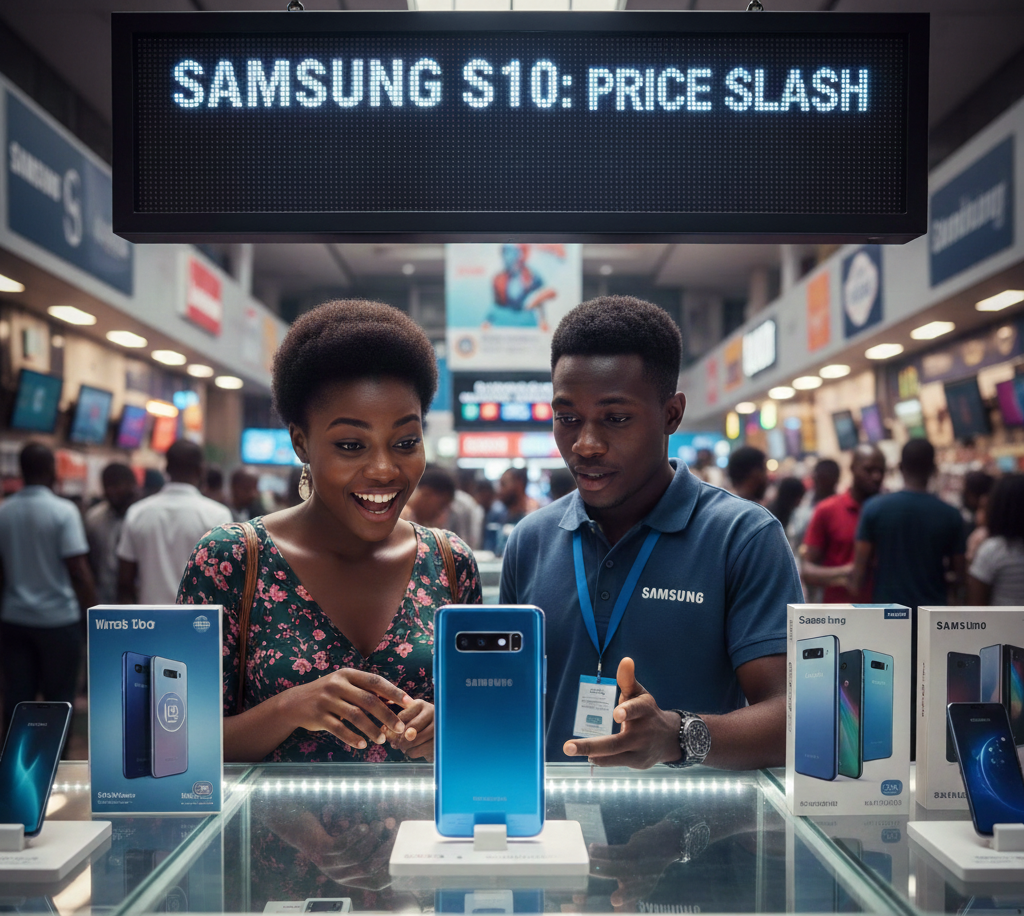
As of the latest checks, the Samsung Galaxy S10 (128GB variant) sells for roughly ₦260,000 on Jumia Nigeria. Jumia’s listing for a “Samsung Galaxy S10 128GB/8GB, Single Sim” shows a price of ₦260,000.
This can fluctuate with promotions or stock, but it provides a ballpark for the retail price of a new or refurbished S10 in Nigeria’s online market. It’s worth noting that early in its life, the S10 cost much more; launch prices were closer to ₦300k or higher. Over time, due to newer models being released, the S10’s price has fallen to these levels.
Other Nigerian e-commerce sites list similar prices. For example, the Konga store lists the same model at ₦260,000 as well. Some online merchants bundle accessories, so prices can range a bit (sometimes you see S10 phones with cases or protectors included at a slightly higher total).
In any case, around ₦260k (give or take) is a current reference price for a Galaxy S10 (128GB, single SIM) if purchased online in Nigeria today. Of course, promotions, color choices, or limited stock could push it up or down by a few thousand naira.
Check out Full List of Samsung Phones and Prices in Nigeria
A popular option in Nigeria’s phone market is importing and selling devices that were used (and often still in good condition) overseas. For the Samsung S10, UK-used or other foreign-used units command lower prices compared to brand-new ones.
For example, a Lagos electronics retailer lists a London-used Samsung Galaxy S10 (128GB) at about ₦185,000–₦190,000. On local classifieds such as Jiji, UK-sourced S10s are often advertised too. One Jiji listing offers a “Clean as new” UK-used Galaxy S10 (128GB) for ₦210,000.
In general, you can expect a UK-used Galaxy S10 in Nigeria to go for roughly ₦180k to 210k, depending on exact condition, warranty, and negotiation. These units are typically in very good shape (often “Grade A”) but are second-hand, which accounts for the lower price compared to brand-new stock.
Buyers should ensure the device is fully functional (e.g., not locked to another country’s carrier) before purchase. But broadly, UK-used S10 phones provide a cost-saving option (often several tens of thousands less) relative to buying new.
Prices may occasionally dip even lower (some Jiji listings have shown used S10s at ₦160k or ₦170k for less-than-perfect conditions) or slightly higher if sold as “like new.”
Slot is a major mobile retail chain in Nigeria. At present, Slot’s official online store does not list the Galaxy S10 as one of its offerings, likely because Slot focuses on newer models.
As of early 2026, searching Slot’s catalog for “Samsung Galaxy S10” brings up no direct match. Instead, Slot currently showcases later Samsung and Xiaomi models. This suggests that Slot may not actively stock the S10 new.
However, for context, Slot does list other older models. But, one might expect it around the ₦200–300k range.
Jiji is Nigeria’s largest online classifieds marketplace, where individuals and shops list new and used phones. For the Galaxy S10, Jiji shows a wide range of asking prices, reflecting both brand-new and used conditions.
Recent Jiji ads for the Samsung S10 (128GB) range from around ₦170,000 for used units up to about ₦310,000 for brand-new or sealed boxes. For example, some sellers list an “original” new S10 at ₦310,000, while other dealers offer used or “UK used” units around ₦210,000.
See also: Samsung A06 Price in Nigeria | Full Phone Specification
EasyBuy is a Nigerian tech retailer that offers installment payment plans. They often list price ranges for phones. According to an EasyBuy price list, the Samsung Galaxy S10 was priced between ₦250,000 – ₦290,000. This range likely reflects different conditions or configurations (for example, color variants or promotions).
In other words, buying an S10 on EasyBuy’s installment plan would cost in the ₦250,000 range. This aligns well with the outright cash prices seen elsewhere (EasyBuy’s higher price point may include service fees over time).
For consumers, this confirms that the going rate for an S10 in Nigeria (even through financing) is on the order of ₦250k+. Those numbers from EasyBuy were presumably for the 128GB model in new condition.
If an S10 were on sale at a lower price elsewhere, EasyBuy might not reflect that discount. Nonetheless, the EasyBuy listing provides an official ballpark: roughly ₦270k± for a new S10 in Nigeria under their plan.
Despite being several years old, the Galaxy S10 is still widely available in Nigeria through various channels. Below, we outline the main online and offline options for purchasing the S10.
In any offline purchase, compare warranties and ask for original receipts if possible. The advantage of brick-and-mortar buying is immediate inspection and sometimes bargaining. Prices should be in line with the online ranges mentioned above (allowing for a small premium).
Also see: Samsung A05 Price in Nigeria | Full Phone Specification
The S10 is much, much better
Samsung Galaxy S10+ has stronger specs than the S10, as it boasts a larger screen, dual front camera, faster processor and more powerful battery.
Opens the hardware test menu
The Samsung Galaxy S10, though introduced in 2019, remains a capable smartphone and a popular choice in Nigeria’s used and new markets. The high-quality means it still handles modern apps and media smoothly. The phone’s specs make it a well-rounded device.
In Nigeria, the Samsung S10 price has settled into a more affordable bracket. Anyone looking for a past-generation flagship with modern features can consider the Galaxy S10. It delivers a premium user experience (especially with its display and cameras) at a mid-range price point today.
Whether you choose to buy online or in-store, knowing the current prices in Nigeria and the S10’s detailed specifications will ensure you make an informed purchase.