Physical Address
60 Ekwema Cres, Layout 460281, Imo
Physical Address
60 Ekwema Cres, Layout 460281, Imo


Microsoft Research has just launched Paza, a groundbreaking project to improve automatic speech recognition (ASR) for low-resource languages. It starts with African languages that big AI systems have ignored for too long. As voice tech grows more important for getting information and services, many communities still can’t join the digital world because their languages lack support. People who mainly speak instead of read or write face big barriers. Paza fixes this by offering a clear benchmarking platform and speech models tested in real life.
Mercy Muchai, a Research Engineer II and project lead, said: “Language should not be a barrier to access in the digital age. With Paza, we are co-creating speech technology with the communities who use it, ensuring that the voices of speakers of low-resource languages are heard, understood, and meaningfully included.” Her words show the heart of the project – making sure everyday people help build the tech.
Read Next: She Wins Africa, IFC and World Bank Partner to Empower 1,000 Women Entrepreneurs
The main part of Paza is PazaBench, the first platform just for testing low-resource languages. It covers 39 African languages and checks 52 top speech and language models. This includes new Paza ASR models for six Kenyan languages. Anyone can use this free, standard tool to spot weak spots in models and make them better fast. Researchers and developers now have a way to measure progress and push for improvements that help underserved groups.
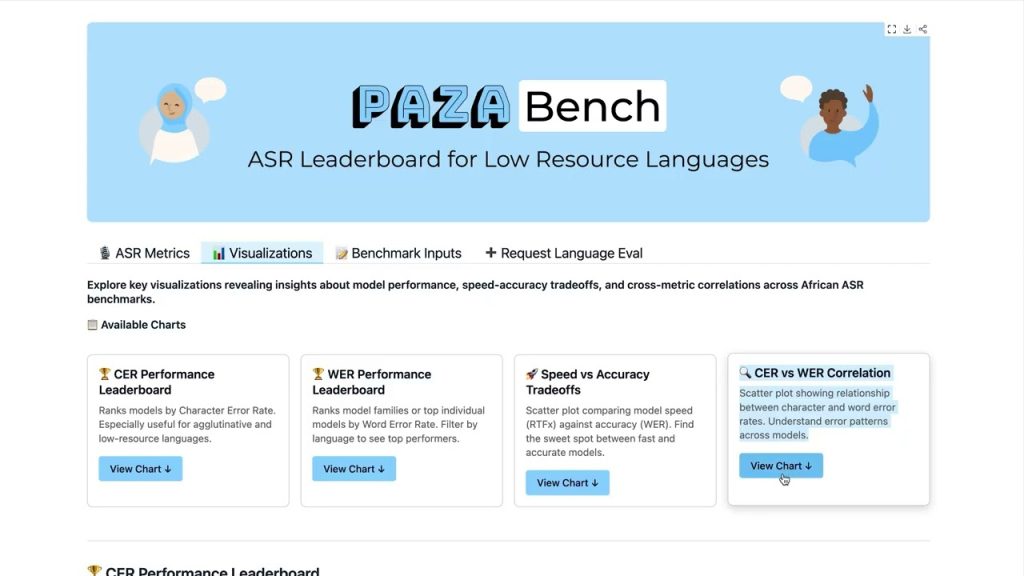
Microsoft also released fine-tuned ASR models for Swahili and key Kenyan languages like Dholuo, Kalenjin, Kikuyu, Maasai, and Somali. These models came from close work with local communities. Teams tested them in tough real-world spots, like areas with bad internet or lots of noise. This makes sure the tech works on normal phones, not just perfect labs. It handles local accents, different dialects, weak signals, and cultural ways of speaking.
Paza builds on Microsoft’s past work to help overlooked communities with AI tools. The name “Paza” comes from Swahili and means “to project” or “to raise your voice.” It perfectly captures the goal: lift up voices that tech has missed.
Kevin Chege, a Machine Learning Engineer on the team, added: “Real-world speech recognition must work for everyone, not just a few widely spoken languages. By testing models with community members including farmers using everyday mobile devices, we’re building systems that reflect real usage conditions and deliver practical value.” Testing with farmers on basic phones shows how Paza thinks about daily life in Africa.
This launch matters a lot for Africa’s digital growth. Millions rely on spoken languages for farming tips, health info, banking, or education apps. Poor speech recognition locks them out. Paza changes that by making AI fairer and more useful. Imagine a farmer in rural Kenya asking a voice app in Kikuyu for crop advice – now it could understand perfectly, even with wind or market noise in the background.
Read Next: Google’s New Tools Help Users Erase Personal Info from Search Results
In the future, Microsoft plans to grow PazaBench with more low-resource languages. They will share guides on building good datasets, tuning models right, and testing in real life. By keeping everything open, they want schools, companies, and locals to team up. This speeds up AI that includes everyone.
Paza shows how tech giants can lead with community focus. It tackles big issues like unequal AI access head-on. For African languages, this could unlock new apps, services, and jobs. As voice tech spreads, projects like Paza ensure no one gets left behind. Microsoft’s step forward inspires others to follow, making the digital world truly open to all.
Was this information useful? Drop a nice comment below. You can also check out other useful contents by following us on X/Twitter @siliconafritech, Instagram @Siliconafricatech, or Facebook @SiliconAfrica.