Physical Address
60 Ekwema Cres, Layout 460281, Imo
Physical Address
60 Ekwema Cres, Layout 460281, Imo

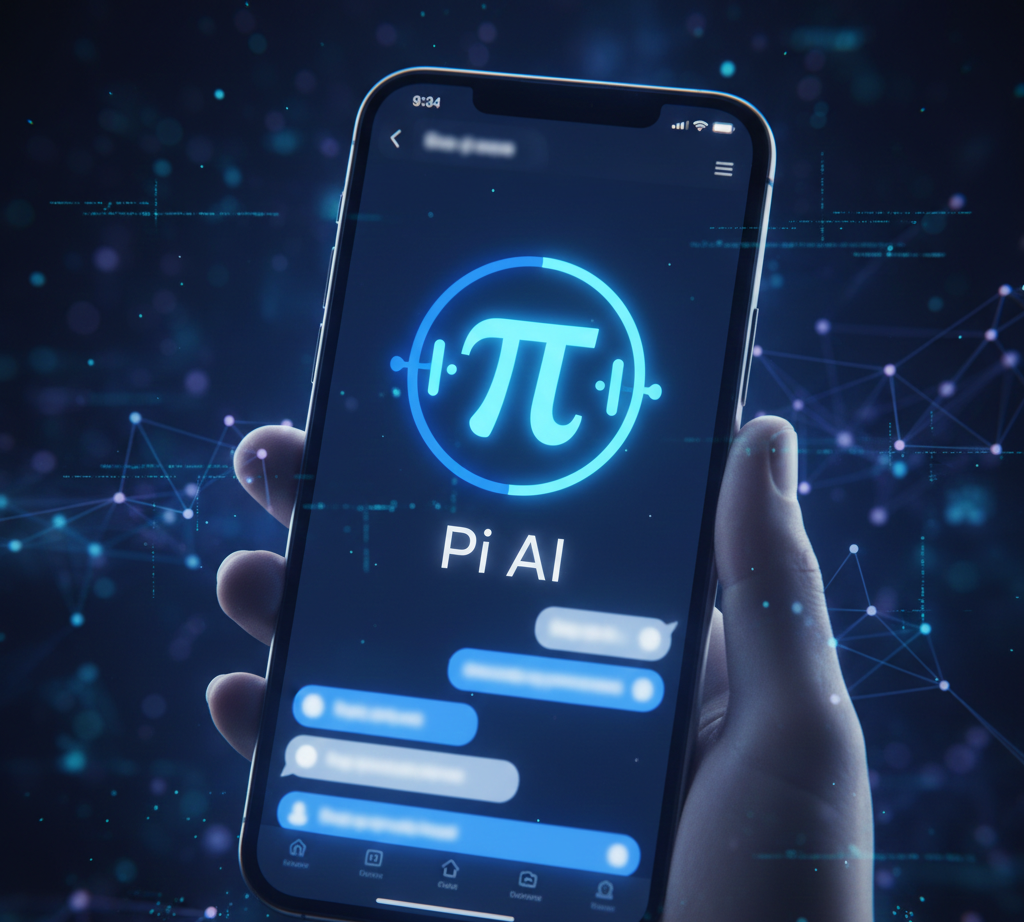
As the use of AI chat robot dominate the market, users are seeking an emotionally intelligent technology that can help solve day-to-day problems. That’s where Pi Ai comes in.
Developed by Inflection AI, Pi AI is a conversational assistant, marketed as a personal, emotionally intelligent chatbot companion.
Pi was created to help people communicate with a chat robot, consult it on different matters, and seek assistance. The application presents itself in the following way: Hey, I am Pi. I am an emotionally intelligent AI, who is there to help you feel confident and supported to face your day-to-day life.
As we journey through this writing, we will unveil all you need to know about Pi Ai: its features, uses, and how it works.
Pi AI is a digital chatbot or virtual assistant created by Inflection AI. It is often called a “personal AI” because it is meant to interact continuously with an individual, learning from those interactions. Unlike task-specific bots, Pi’s role is broad: it serves as an on-demand helper or friend.
Official descriptions emphasize that Pi is “supportive and smart,” ready to help anytime. In reality, Pi is a phone app (iOS and Android-based), in which a user inputs or talks commands, and Pi replies conversationally.
Its developers emphasize that Pi is designed with a high level of empathy and natural language understanding, and making chats smooth and user-friendly.
Explore the 12 Best AI Market Research Tools for Tech Projects
Pi’s feature set centers around conversation and personalization. Its main capabilities include:
Pi is designed to hold pleasant, free-form chats on any topic. It simulates a humanlike conversation partner.
According to Inflection, Pi offers “conversational support” that feels “natural and easy”. This means the language model behind Pi attempts to keep the dialogue flowing, ask questions, and respond warmly.
A key feature of Pi is that it is always online. There are no downtime or scheduling constraints – you can message or talk to Pi at any hour.
Inflection notes Pi is “here for you anytime”, meaning it serves as an on-call assistant for casual chats or urgent questions alike.
Pi is built to be empathetic. Its messaging style is often supportive, aimed at making users feel understood. The description “emotionally intelligent” suggests Pi tries to be encouraging and motivating.
For instance, the app encourages features like “Talk it out” mode, where you can vent or discuss problems and Pi will respond in a comforting way.
Pi adapts to each user. It keeps track of previous conversations to provide more relevant responses over time. As Inflection describes, “Pi grows with you – the more you talk with Pi, the better it evolves and understands you”.
This implies Pi’s model fine-tunes itself to your style, interests, and needs as you keep using it.
Pi is not limited to small talk. It can help users learn and create. The interface offers modes like “Fuel your curiosity” (to learn new topics or practice skills) and “Get inspired” (to brainstorm ideas or get recommendations).
For example, under “Fuel your curiosity,” Pi can explain a concept or help practice a language. Under “Have fun,” it can entertain by answering arbitrary questions.
Pi can assist with decision-making and planning. The app highlights a “Get Things Done” mode where it helps you work through a task or organize thoughts into an action plan. This means Pi will talk through options or next steps if you ask for guidance on a project or challenge.
In addition to text chat, Pi supports live voice conversation. The user can turn on a voice mode and talk to Pi. The option can make communication seem more natural should you want to speak out loud, as is the case with a phone call.
Pi is an English-based product, but its design implies that it can be reused in other languages.
To the current state, Pi supports English as its primary interface and answers, although Inflection states that the team plans to use a variety of languages in the future.
Pi is usable as an application on both iOS and Android-based mobile devices and also has a web interface. It is also easy to use both typing and speaking and also keeps your chat history in sync up to the various devices.
To recap it all, the aspects of Pi are all based on the idea of creating a conversational type of AI that seems like a friendly, understanding companion, capable not only of answering questions but also being able to listen, as well. The strengths of it are availability, personalization, and various conversation modes depending on the needs.
Check out the 10 Best Google Ads AI-Powered Tools to Help Marketers Ad Campaigns

The application of Pi AI in daily life can be used when a user may want someone to talk to, to consult or help them. Common use cases include:
Pi has been used by several users as a friend. You are able to complain about your day or personal problems or even just have a chat.
Since Pi is never judgmental, it can be applied to emotional support or relieving of stress.
An example is when you are worried about the choice of life and you can discuss it with Pi via the voice or chat feature, and Pi will get your voice and provide some feedback.
Pi can be used as a learning aid by students or curious ones. Pi may be used to explain issues, to take a person through problems or offer practice questions.
One of the listed applications is homework help, where Pi can take you through homework or explain something to you. The conversation is done in a conversational form, unlike by a strict tutor, and it might be more interesting to learn.
Pi has the ability to conduct a free-form conversation, it can be used to practice a foreign language.
The supported modes of language switching may be given to the user, or the user may simply talk to Pi using the language they want to become more fluent in. The application can even make Pi translate or give an explanation of a phrase.
Read about 10 Free Tech Training in Nigeria
The general advice and idea generation is also found on Pi. You may request Pi to give recommendations on what to eat, creative writing topics, traveling, or even code.
The features of the app (Get Inspired and Fuel Your Curiosity) are aimed directly at fulfilling these needs. As an example, you might brainstorm on something to write on a blog or request ideas on how to decorate a room and Pi will provide creative ideas.
Occasionally, users talk to Pi as entertainment. Pi is able to tell jokes, stories or even word games.
The Have Fun mode promotes questioning Pi with anything such as some light-hearted questions or trivia. It may be a means of time-wasting or a means of inspiration.
In case you are making a difficult choice (selecting a product, working out a schedule, etc.), you can discuss the pros and cons with Pi.
The logical thinking of Pi can be used to identify steps or factors to be taken into consideration, which essentially can enable you to structure your own thoughts and develop a course of action.
Lonely people or those with limited socializing often turn to Pi as a company. It gives one the feeling of someone to communicate with at all times.
Pi, as a social anxiety tool may be a secure zone in which social anxiety users can talk out loud and practice their speaking without tension.
In this case, though Pi does not fit in systems to do anything (such as book flights or check the weather), you can still ask factual questions, summaries, or explanations.
Pi will seek to respond with the knowledge that it possesses. It can be used to get quick information or even explanations without having to go through the search feature.
In general, Pi applications focus on the human-oriented relationships: entertainment, companionship, advice, and learning. It is not intended to be used in serious work, such as the control of smart devices or accounting (unless in the nearest future), but it excels in the field of conversation.
A mix of 24/7 and personalized responses suggests that Pi can fit into every-day life either to talk, tutor or even to have a little amusement.
Read also: What Is Janitor AI? Features, Uses, & How It Works
Pi is technically a cloud-based chatbot that receives user input (text or voice) and responds to their conversations with a complex language model. Inflection AI does not describe the architecture in detail but the overall workflow can be outlined:
Pi communicates with users via an application or web chat interface. You write (or talk) a message to Pi, and it is transferred to the Pi servers. The application can also be used to change the conversational mode (e.g. chat, creative prompts, voice chat).
The Natural language understanding helps Pi to interpret your intent and context when it gets your input.
Behind the scenes, a large-scale language model (trained on a large amount of text data) processes the text to derive meaning, emotional tone, and facts to be relevant.
Next, Pi’s engine generates a response. It constructs sentences by predicting one word at a time in a way that best answers or continues the conversation. Importantly, Pi’s model is tuned for empathy and helpfulness.
This means it not only retrieves information but also frames responses in a supportive tone. For example, Pi will consciously use encouraging language and may ask follow-up questions to make the chat feel interactive.
Check out to see the 10 Tech Millionaires in Nigeria
Pi adapts over time. It keeps a record of the previous conversations and the user preferences to tailor the subsequent responses.
According to the description given by Pi, the more one speaks with Pi, the more it develops and learns about you.
This suggests Pi updates a user profile in the background, perhaps weighing your earlier questions and feedback to better tailor its answers on subsequent chats.
Since Pi focuses on emotional intelligence, it must have filters to ensure safe and proper conversation.
In case any sensitive issues are brought up, Pi will be programmed to provide a supportive response and either avoid harmful content or respond in a supportive manner.
The app description mentions that Pi will “steer” conversations away from inappropriate areas for safety.
Pi’s system is regularly updated. Its core model periodically incorporates new training to improve accuracy and understanding of new terms or events. Inflection notes that the model is updated with human-reviewed data to minimize errors.
In practice, this means Pi’s developers refine its understanding and add new knowledge, similar to updating an app with new features.
Finally, Pi delivers the generated response back to the user interface. When voice mode is used, the text response can be changed into speech with the use of text-to-speech, which can be answered using voice.
In other cases, it is in the form of a text bubble in the chat. The user then progresses the conversation and the process repeats itself.
Pi is essentially a high-tech chatbot: you enter what you want to say into it, it processes the input and then generates a useful response with a trained model.
The difference between Pi and Pi is that it is about caring, contextualized communication. It aims to adopt a friendly tone and to be self-enhancing with every conversation.
The experience to the user is easy – you text and get a text back in real time – but it is under the hood that huge language models and emotional-context algorithms are working to make the conversation feel personal and supportive.
See also: Top 15 AI Game Generators
Pi is much stronger than ChatGPT when asked about recent events, even with Bing integrated into GPT, Pi seems to do a better job here.
It’s free to use
Response Limitations
Pi AI is an innovative type of conversational assistant with a focus on emotional appeal and 24/7 service. Pi will be an everyday companion by integrating an effective language model and a well-being-oriented design to achieve this goal.
It can be an answer engine, idea partner, casual friend or coach, all in the same application.
Pi itself is as the developers put it useful, friendly, and fun. Although the field still developing, Pi shows how AI can go beyond automation of tasks and provide personal guidance and companionship.
Its expanding abilities also indicate that in the near future, these kinds of personal chatbots may be widely used in the learning process, creativity, and even, mental health in our lives.