Physical Address
60 Ekwema Cres, Layout 460281, Imo
Physical Address
60 Ekwema Cres, Layout 460281, Imo

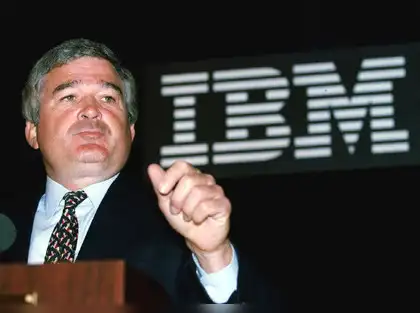
Louis Gerstner, the man who saved IBM, has died. It’s sad news for the tech world. Louis Gerstner, who took over International Business Machines (IBM) when it was basically on its deathbed and turned it back into a powerhouse, passed away on Saturday. He was 83 years old.
IBM’s current chairman and CEO, Arvind Krishna, shared the news in an email to employees on Sunday. He didn’t mention the cause of death, but he made it clear just how much Gerstner meant to the company.
People often point to Gerstner’s nine years as chairman and CEO of “Big Blue” as a textbook example of strong corporate leadership. The man who saved IBM dies, and we’re left remembering how he pulled off one of the biggest turnarounds in business history.
Read Next: Oyedele Spells Out Tax ID Requirements for Bank Accounts
Back on April Fool’s Day in 1993, Louis Gerstner stepped in as the first outsider ever to lead IBM. The company, based in Armonk, New York, was staring down bankruptcy or being carved up into pieces. It had once ruled the world of personal computers and mainframes, but those days were gone.
Gerstner made a bold shift, steering IBM toward business services instead of just cranking out hardware. He stopped a plan to split the company into a dozen or more “Baby Blues”, semi-independent units meant to chase bigger profits.
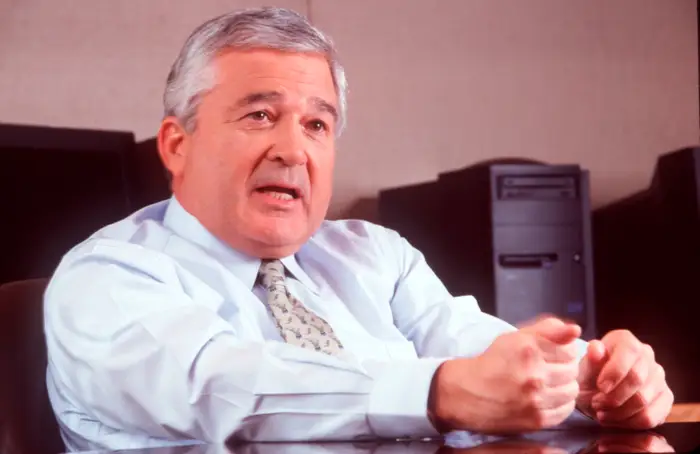
He cut costs sharply and sold off things that weren’t pulling their weight, like extra real estate and even IBM’s collection of fine art.
Out of 300,000 employees, he let go of 35,000. Those folks had grown used to a culture of lifetime jobs, something rooted in the principles set by former CEO Thomas Watson Sr. back in the early 1900s.
Louis Gerstner pushed for teamwork across the whole company, ditching the old loyalty to separate divisions. He tied pay to how the company did overall, not just personal wins.
To hit those goals, he wanted constant check-ins instead of waiting for yearly reviews. He had a great line for it: “People do what you inspect, not what you expect.”
One of his biggest moves was killing off IBM’s habit of selling products that only worked with other IBM stuff, from PCs to operating systems to software. The man who saved IBM dies, but his changes live on.
He ditched products that weren’t cutting it, like pulling the plug on OS/2. That was an operating system meant to take on Microsoft’s Windows, but customers just weren’t buying it.
Krishna put it well in his note: “His leadership during that period reshaped the company. Not by looking backward, but by focusing relentlessly on what our clients would need next.”
Under Louis Gerstner, IBM zeroed in on middleware, software for things like databases, systems management, and transaction handling.
The company turned into a neutral helper for businesses’ networks and systems, no matter what brand of hardware they used.
Louis Gerstner saw the internet and e-business coming early on. He figured right that it would mean less focus on personal computers and more on servers, routers, and fancier gear. That played to IBM’s strengths in services and sold well to folks like chief technology officers, who IBM’s salespeople already knew.
Later, he snapped up key companies, like Lotus Development for $2.2 billion. Their Notes product helped IBM customers team up across whole enterprises.
That pivot from hardware to services paid off huge, revenue from services jumped from $7.4 billion in 1992 to $30 billion by 2001.
IBM’s stock price climbed from $13 to $80 during his nine years as CEO, adjusted for splits. The company’s market value soared from $29 billion to about $168 billion.
In his book, “Who Says Elephants Can’t Dance? Leading a Great Enterprise through Dramatic Change” from 2002, Louis Gerstner wrote: “If I had a vote, the most significant legacy of my tenure at IBM would be the truly integrated entity that has been created. It certainly was the most difficult and risky change I made.”
Louis Vincent Gerstner Jr. came into the world on March 1, 1941, in Mineola, New York. His dad, Louis Gerstner Sr., drove a milk truck, and his mom, Marjorie Rutan, worked as a secretary and college administrator. He was one of four brothers.
He went to Chaminade High School in Mineola, a tough Catholic school, and graduated. Then he earned an engineering degree from Dartmouth College and an MBA from Harvard University.
Right after Harvard, Louis Gerstner joined McKinsey & Co. as a consultant. He became a partner in just four years and stayed 12 years before jumping to American Express.
There, he ran the credit-card side, then took over travel-related services. Under him, Amex, mostly a travel card back then, pushed into retail stores and launched premium cards that let people carry balances.
But with CEO James D. Robinson III blocking his path to the top, Gerstner moved to RJR Nabisco. He spent four years there, mainly tackling the $25 billion debt from the leveraged buyout that formed the tobacco and consumer products company.
IBM’s board started hunting for a new CEO after pushing out John Akers in January 1993. The company had just posted its biggest annual loss ever. They picked Louis Gerstner for his management chops, not computer know-how. His brother Richard had spent 30 years at IBM, even leading the personal computers division.
From his first day in April 1993 to when he announced stepping down in January 2002, IBM’s shares shot up ninefold. Meanwhile, the Standard & Poor’s 500 Index only rose 154%.
Sam Palmisano took over as CEO, then chairman when Gerstner fully retired at the end of 2002.
Read Next: Rwandan Fintech Startup Kayko has Raised $1.2 Million in Seed Funding Round
In 2003, Louis Gerstner became chairman of the Carlyle Group, a private-equity firm in Washington. He helped it grow into Asia and Latin America and laid groundwork for going public in 2012. He stepped back as chairman in 2008 but stayed on as a senior adviser.
With his wife, Robin, he had two children. Their son, Louis III, tragically died in 2013 from a choking accident in a restaurant.
Through Gerstner Philanthropies, the family backed biomedical research, environmental and education efforts, and social services in places like New York City, Boston, and Florida’s Palm Beach County. They’ve long supported the Mayo Clinic too.
Was this information useful? Drop a nice comment below. You can also check out other useful contents by following us on X/Twitter @siliconafritech, Instagram @Siliconafricatech, or Facebook @SiliconAfrica.