Physical Address
60 Ekwema Cres, Layout 460281, Imo
Physical Address
60 Ekwema Cres, Layout 460281, Imo

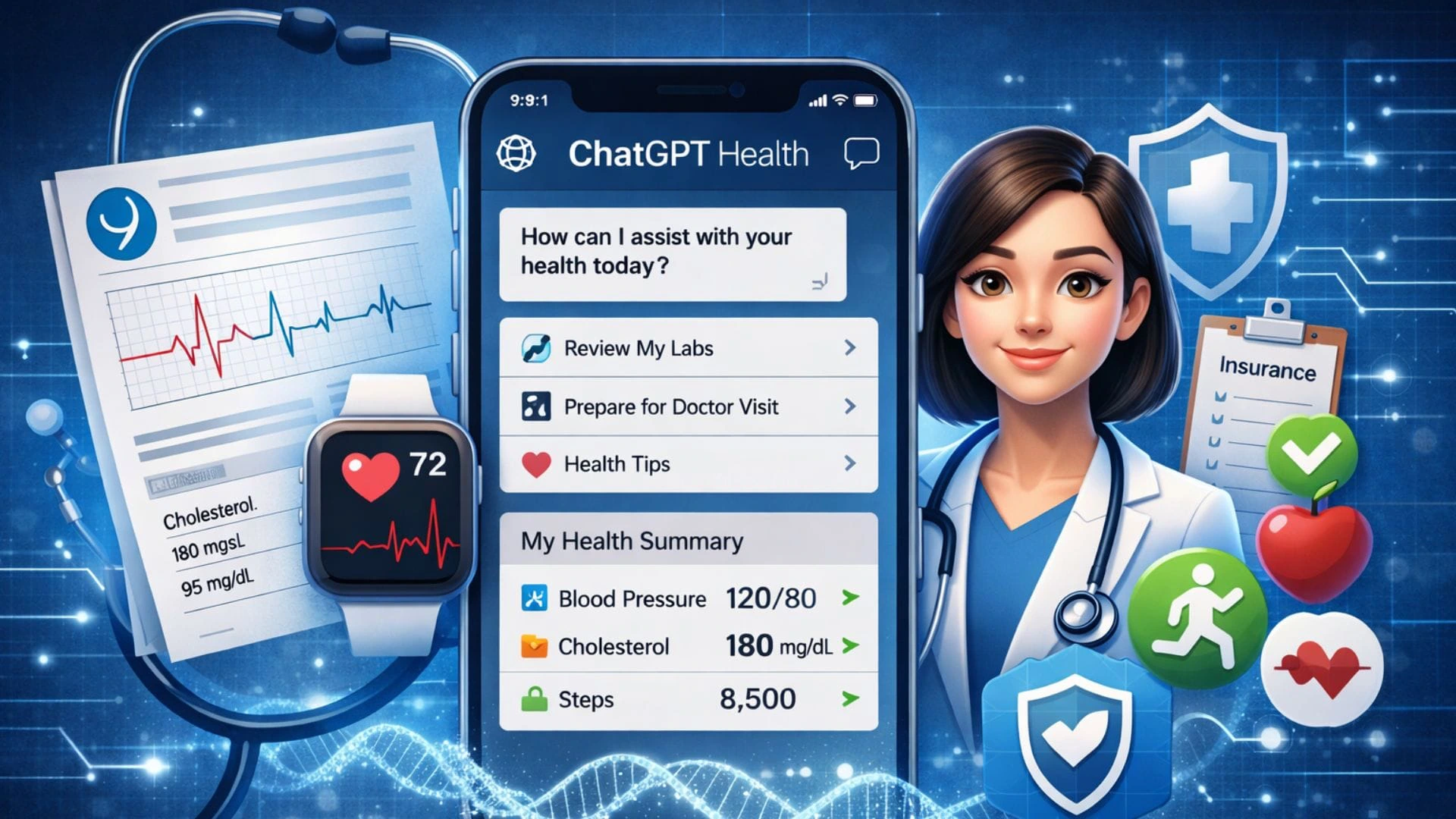
OpenAI has introduced a new health-focused tool inside its popular AI platform, and it could change how many people approach everyday health questions. OpenAI unveils ChatGPT Health for AI-powered wellness to give users a safer and more useful way to ask about their health, understand medical information, and organize wellness data in one place. This new experience sits inside ChatGPT, but it has extra protections and features designed specifically for health and wellness, much like the electronic medical records systems powering startups detailed in Top 10 Health Techs in Nigeria.
OpenAI says that health and wellness questions already make up a large share of how people use ChatGPT today. According to the company, more than 230 million people worldwide ask health-related questions on ChatGPT every week. This number is based on de-identified conversation data, meaning personal details are removed. Because so many people already use ChatGPT for health topics, OpenAI unveils ChatGPT Health as a way to bring more structure, context, and safety to those conversations.
The core idea behind ChatGPT Health is simple: combine personal health information with AI-generated answers in a secure way. OpenAI has introduced ChatGPT Health as a separate health-focused experience within the main app. Users can choose to link their medical records and some wellness applications to ChatGPT Health. This extra information helps the AI give answers that are more tailored to each person’s situation, while still avoiding diagnosis or treatment recommendations. OpenAI unveils ChatGPT Health for wellness support, not as a replacement for doctors or medical professionals.
Read Next: Nigeria Mandates 30-Second Refunds for Failed Airtime Top-Ups Starting March 2026
With this new feature, users can securely connect data from electronic medical records and selected health apps. At launch, ChatGPT Health supports connections with Apple Health, Function, and MyFitnessPal, among others. Once connected, the system can use information such as lab results, activity levels, nutrition logs, and other wellness data to provide more relevant responses. For example, someone could upload or connect their recent blood test results and ask ChatGPT Health to explain them in simple language. Another person might connect MyFitnessPal and ask how their calorie intake aligns with their fitness goals.
OpenAI unveils ChatGPT Health for AI-powered wellness use cases that go beyond just answering general health questions. The tool can help users get ready for medical appointments by summarizing their concerns, listing questions to ask a doctor, or organizing their recent health data in a clear way. It can also look at patterns in diet and exercise, highlight trends, and help people better understand how their daily habits may affect their overall wellness.
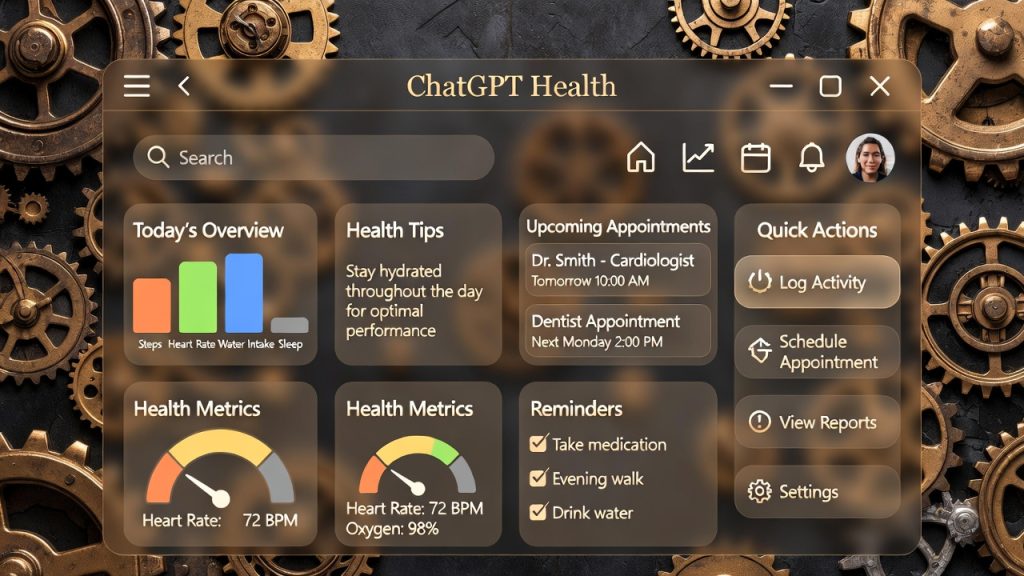
In addition, it can explain insurance options in simpler terms, helping users make sense of complex coverage details or paperwork. Throughout all of this, OpenAI stresses that ChatGPT Health is meant to support understanding and planning, not to give medical diagnoses or decide on treatments.
Because health information is very sensitive, privacy and security are central to how this feature works. OpenAI unveils ChatGPT Health as a separate space inside ChatGPT, with its own protections. Health-related chats, connected apps, and uploaded files are kept apart from other conversations in the system. There are separate memory systems for health data so that information shared in ChatGPT Health stays compartmentalized. OpenAI explains that while ChatGPT may use limited context from non-health conversations to make responses more relevant, health data itself does not flow back into normal chats outside the Health section.
Another important privacy detail is how the data is used for training AI models. OpenAI says that conversations inside ChatGPT Health are not used to train its foundation models. This means that what a user discusses in this health-focused space will not be fed back into the main training process that shapes how ChatGPT works in general.
Users also have control over their stored health-related memories. They can view or delete these items through the settings interface whenever they choose. If someone starts talking about health issues in a regular ChatGPT chat, the system may suggest moving the conversation into ChatGPT Health to benefit from these extra protections and controls.
OpenAI emphasizes that ChatGPT Health was not built in isolation. The company says it worked closely with physicians from around the world to guide how the system should communicate about health. Over two years, more than 260 physicians from 60 different countries and many medical specialties reviewed AI-generated responses. They evaluated over 600,000 outputs across 30 focus areas, giving feedback to improve clarity, accuracy, and safety.
This process helped shape how ChatGPT Health explains medical concepts and when it suggests that a user follows up with a healthcare professional. OpenAI unveils ChatGPT Health for wellness support with this expert input in mind, so that the AI is more likely to encourage appropriate real-world care where needed.
Right now, ChatGPT Health is not available to everyone instantly. OpenAI is rolling it out slowly to gather feedback and improve the experience. The feature is being launched first to a limited group of users. People on Free, Go, Plus, and Pro plans outside the European Economic Area, Switzerland, and the United Kingdom can sign up for a waitlist. As OpenAI unveils ChatGPT Health for AI-powered wellness at this early stage, the goal is to refine it before opening it more widely. The company says it plans to expand access and make ChatGPT Health broadly available on the web and on iOS in the coming weeks.
There are also some regional and technical limits on what integrations are available at launch. Certain medical record connections and third-party wellness apps currently work only in the United States. In addition, integration with Apple Health requires an iOS device. This means that while users in many places can eventually use ChatGPT Health for basic wellness questions and general health understanding, some of the more advanced data-linking features will roll out slowly and may appear first in specific countries. OpenAI unveils ChatGPT Health for wellness with a global vision, but it will take time to reach full feature parity across regions.
For everyday users, the arrival of this feature could make it easier to navigate personal health information that often feels confusing or overwhelming. People frequently struggle to understand lab reports, scan medical portals, or interpret numbers from fitness trackers and nutrition apps. By combining these data sources in a secure way, ChatGPT Health can act as a kind of “translator,” turning complex terms into plain language and helping users ask better questions when they meet their doctors. OpenAI unveils ChatGPT Health for AI-powered wellness with the idea that informed patients can take a more active role in managing their health.
At the same time, OpenAI is clear about the limits of the system. ChatGPT Health is not meant to replace medical professionals or emergency care. It does not provide diagnoses or decide on treatments. Instead, it is designed to support understanding, planning, and organization. For example, it may help someone prepare a list of symptoms and questions before visiting a clinic, or explain what a medical term means based on a lab result, but it should still guide users to consult a doctor for decisions that affect their health. The company’s work with physicians also focused on making sure the AI knows when to recommend follow-up with a healthcare provider.
Read Next: EduTrack Launches an AI-powered Education System in Tanzania
As OpenAI unveils ChatGPT Health for wellness, it is stepping into a fast-growing area where technology and healthcare overlap. Many people are already used to tracking steps, heart rate, diet, and sleep with apps and devices. Bringing these tools together with AI could make it easier to see the bigger picture of one’s health. However, that also raises questions about data protection, responsible use, and the need for clear boundaries between helpful information and medical advice. By creating a separate, more protected space inside ChatGPT and setting rules for how the data is used, OpenAI is trying to address these concerns from the start.
In summary, OpenAI has introduced ChatGPT Health as a dedicated health-focused experience within ChatGPT that brings together personal health data, wellness apps, and AI-assisted explanations in a secure environment. It is designed to help people better understand test results, prepare for appointments, track wellness patterns, and navigate insurance, while keeping strict limits on data use and avoiding diagnosis or treatment.
OpenAI unveils ChatGPT Health for AI-powered wellness at a time when millions of people already rely on the platform for health questions, and the company aims to expand access in the coming weeks as it gathers feedback and continues to refine the experience.
Was this information useful? Drop a nice comment below. You can also check out other useful contents by following us on X/Twitter @siliconafritech, Instagram @Siliconafricatech, or Facebook @SiliconAfrica.